


Artisan Lame + 5 Blades
Artisan Lame + 5 Blades
Couldn't load pickup availability


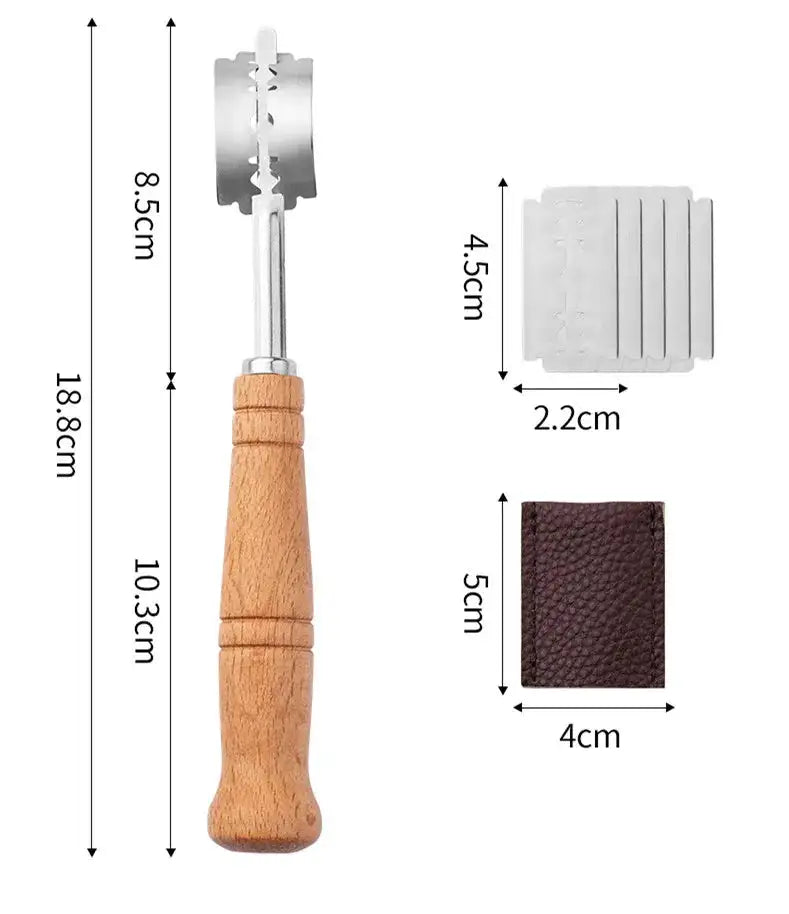
You didn't spend 18 hours on a cold-fermented sourdough just to hack at it with a kitchen knife. This bread lame gives you the clean, decisive cuts your loaves need to bloom properly in the oven - the kind that open into a crispy, golden ear every time.
The curved stainless steel blade sits at just the right angle for classic slashes on boules, batards, and baguettes, while the wooden handle gives you a steady, comfortable grip even when you're working fast on sticky, proofed dough.
When the blade dulls, swap it out in seconds. Five replacement razor blades are included so you're covered for plenty of bakes. And the faux leather storage pouch keeps everything tucked safely in your drawer between sessions.
- 1x Artisan Bread Lame with ergonomic, non-slip handle
- 5x replaceable razor-sharp curved blades
- Safe blade storage when not in use
- Compatible with sourdough boules, batards, baguettes, and artisan loaves
- Price: $22; free shipping on orders over $50
- Curved blade geometry creates lift at the point of contact rather than downward pressure; this is what forms the ear and drives oven spring upward
- Ultra-sharp replaceable blades glide through wet, high-hydration dough without dragging or deflating the surface
- Controlled scoring gives the dough a defined expansion point, producing a more open crumb and better height compared to unscored or poorly scored loaves
- Five blades included so you can swap as sharpness degrades; a dull blade is the most common cause of scoring frustration, not technique
- Non-slip ergonomic handle allows confident, consistent movement at low scoring angles
- Honest limitation: the lame removes the tool as a variable, but results still depend on dough temperature, hydration, and proof level. An over-proofed dough will not produce a strong ear regardless of blade quality
- Sourdough boules and batards, particularly high-hydration doughs where drag is the primary scoring problem
- Baguettes and long loaves requiring shallow, angled cuts across a longer surface
- Decorative artisan bread scoring and pattern work on boule surfaces
- Beginner sourdough bakers who want to remove the tool as a variable from the start
- Experienced bakers upgrading from a knife, box cutter, or straight razor
- Not suited to enriched doughs such as brioche or challah; these softer doughs do not require surface tension release scoring
- Not suited to flatbreads or focaccia that are dimpled rather than slashed before baking
| Tool | Blade Sharpness | Curved Geometry | Ear Formation | Suited to Wet Dough |
|---|---|---|---|---|
| Exanas Artisan Lame | Razor-sharp, replaceable | Yes curved blade | Strong ear achievable | Yes, designed for high-hydration dough |
| Straight razor blade held by hand | Sharp initially, no handle control | No flat geometry | Possible but inconsistent | Poor pressure applied unevenly without handle |
| Serrated bread knife | Moderate drags on wet dough | No | Rarely achieved | No wide blade surface deflates dough |
| Box cutter | Variable dulls quickly | No | Difficult | No blade width and angle create drag |
| Scissors | Sharp but wrong tool type | No | Not achievable | Limited; useful for snipping only, not sliding cuts |
- Wipe the blade and handle clean after each use. Do not submerge in water or place in a dishwasher
- Dry the blade immediately after any contact with moisture to prevent corrosion
- Replace blades when the score starts to drag rather than glide, typically after several loaves depending on dough hydration
- Dispose of used blades safely; wrap in tape or card before placing in household waste
- Handle blade swaps with care; hold at the non-edge end during removal and fitting
- Store with blades safely secured when not in use. Do not leave loose blades in a drawer
-
Is a bread lame really necessary, or can I use a sharp knife?
A sharp knife can score bread, but it struggles with wet, high-hydration sourdough doughs. The blade is too wide and the angle too steep, which causes the surface to drag or compress rather than cut cleanly. A lame uses a thin razor blade held at a low angle, and the curved blade specifically encourages the dough to open upward and form an ear. For sourdough at 75% hydration and above, the difference is noticeable from the first use.
-
What is the difference between a curved blade lame and a straight blade lame?
The curved blade is angled to create lift at the scoring point, which encourages the dough to open upward and form the raised ear. It is the standard choice for sourdough boules and batards. A straight blade lies flatter against the dough surface and is often preferred for baguette grigne, the series of shallow, overlapping diagonal cuts along the length of the loaf. The Exanas lame uses a curved blade, which suits the majority of home sourdough scoring styles.
-
How often do I need to replace the blades?
It depends on how often you bake and what type of dough you work with. High-hydration doughs blunt blades faster than lower-hydration ones. The practical test is simple: if your score starts to pull the dough surface rather than glide through it, the blade needs replacing. Five blades are included with the Exanas lame, giving you a meaningful reserve before you need to source more.
-
Is this suitable if I am just starting to bake sourdough?
Yes. Starting with the right tool removes one variable from the learning process early on. Beginners often spend a lot of time troubleshooting scores that are not working, and the cause is frequently the tool rather than the technique. A single long score down the centre of a batard is achievable on a first attempt with a sharp curved blade, and the result gives you something concrete to build on.
-
Does the lame work for baguettes?
Yes. The Exanas lame is suited to baguette scoring, where the cuts are shallower and more angled than on a sourdough boule. The blade moves quickly and lightly across the longer surface of the loaf. The curved blade works well for baguette grigne for most home bakers making occasional baguettes.
-
Is this a good gift for someone who bakes sourdough?
It is one of the more practical sourdough gifts at this price point. Most home bakers have worked around not having a proper lame for longer than they should have. At $22 it sits comfortably in a gift budget, and it pairs naturally with other sourdough tools, a dough whisk, a bread knife, if you want to put together a small kit.
-
What is the return policy?
All Exanas products are backed by a 30-day money-back guarantee. If the lame does not meet your expectations, contact the Exanas customer support team, available 24/7 - to arrange a return or exchange.
- 1x Artisan Bread Lame with ergonomic, non-slip handle
- 5x replaceable razor-sharp curved blades
- Safe blade storage when not in use
- Compatible with sourdough boules, batards, baguettes, and artisan loaves
- Price: $22; free shipping on orders over $50
- Curved blade geometry creates lift at the point of contact rather than downward pressure; this is what forms the ear and drives oven spring upward
- Ultra-sharp replaceable blades glide through wet, high-hydration dough without dragging or deflating the surface
- Controlled scoring gives the dough a defined expansion point, producing a more open crumb and better height compared to unscored or poorly scored loaves
- Five blades included so you can swap as sharpness degrades; a dull blade is the most common cause of scoring frustration, not technique
- Non-slip ergonomic handle allows confident, consistent movement at low scoring angles
- Honest limitation: the lame removes the tool as a variable, but results still depend on dough temperature, hydration, and proof level. An over-proofed dough will not produce a strong ear regardless of blade quality
- Sourdough boules and batards, particularly high-hydration doughs where drag is the primary scoring problem
- Baguettes and long loaves requiring shallow, angled cuts across a longer surface
- Decorative artisan bread scoring and pattern work on boule surfaces
- Beginner sourdough bakers who want to remove the tool as a variable from the start
- Experienced bakers upgrading from a knife, box cutter, or straight razor
- Not suited to enriched doughs such as brioche or challah; these softer doughs do not require surface tension release scoring
- Not suited to flatbreads or focaccia that are dimpled rather than slashed before baking
| Tool | Blade Sharpness | Curved Geometry | Ear Formation | Suited to Wet Dough |
|---|---|---|---|---|
| Exanas Artisan Lame | Razor-sharp, replaceable | Yes curved blade | Strong ear achievable | Yes, designed for high-hydration dough |
| Straight razor blade held by hand | Sharp initially, no handle control | No flat geometry | Possible but inconsistent | Poor pressure applied unevenly without handle |
| Serrated bread knife | Moderate drags on wet dough | No | Rarely achieved | No wide blade surface deflates dough |
| Box cutter | Variable dulls quickly | No | Difficult | No blade width and angle create drag |
| Scissors | Sharp but wrong tool type | No | Not achievable | Limited; useful for snipping only, not sliding cuts |
- Wipe the blade and handle clean after each use. Do not submerge in water or place in a dishwasher
- Dry the blade immediately after any contact with moisture to prevent corrosion
- Replace blades when the score starts to drag rather than glide, typically after several loaves depending on dough hydration
- Dispose of used blades safely; wrap in tape or card before placing in household waste
- Handle blade swaps with care; hold at the non-edge end during removal and fitting
- Store with blades safely secured when not in use. Do not leave loose blades in a drawer
-
Is a bread lame really necessary, or can I use a sharp knife?
A sharp knife can score bread, but it struggles with wet, high-hydration sourdough doughs. The blade is too wide and the angle too steep, which causes the surface to drag or compress rather than cut cleanly. A lame uses a thin razor blade held at a low angle, and the curved blade specifically encourages the dough to open upward and form an ear. For sourdough at 75% hydration and above, the difference is noticeable from the first use.
-
What is the difference between a curved blade lame and a straight blade lame?
The curved blade is angled to create lift at the scoring point, which encourages the dough to open upward and form the raised ear. It is the standard choice for sourdough boules and batards. A straight blade lies flatter against the dough surface and is often preferred for baguette grigne, the series of shallow, overlapping diagonal cuts along the length of the loaf. The Exanas lame uses a curved blade, which suits the majority of home sourdough scoring styles.
-
How often do I need to replace the blades?
It depends on how often you bake and what type of dough you work with. High-hydration doughs blunt blades faster than lower-hydration ones. The practical test is simple: if your score starts to pull the dough surface rather than glide through it, the blade needs replacing. Five blades are included with the Exanas lame, giving you a meaningful reserve before you need to source more.
-
Is this suitable if I am just starting to bake sourdough?
Yes. Starting with the right tool removes one variable from the learning process early on. Beginners often spend a lot of time troubleshooting scores that are not working, and the cause is frequently the tool rather than the technique. A single long score down the centre of a batard is achievable on a first attempt with a sharp curved blade, and the result gives you something concrete to build on.
-
Does the lame work for baguettes?
Yes. The Exanas lame is suited to baguette scoring, where the cuts are shallower and more angled than on a sourdough boule. The blade moves quickly and lightly across the longer surface of the loaf. The curved blade works well for baguette grigne for most home bakers making occasional baguettes.
-
Is this a good gift for someone who bakes sourdough?
It is one of the more practical sourdough gifts at this price point. Most home bakers have worked around not having a proper lame for longer than they should have. At $22 it sits comfortably in a gift budget, and it pairs naturally with other sourdough tools, a dough whisk, a bread knife, if you want to put together a small kit.
-
What is the return policy?
All Exanas products are backed by a 30-day money-back guarantee. If the lame does not meet your expectations, contact the Exanas customer support team, available 24/7 - to arrange a return or exchange.