


Sourdough starter kit
Sourdough starter kit
Impossible de charger la disponibilité du service de retrait


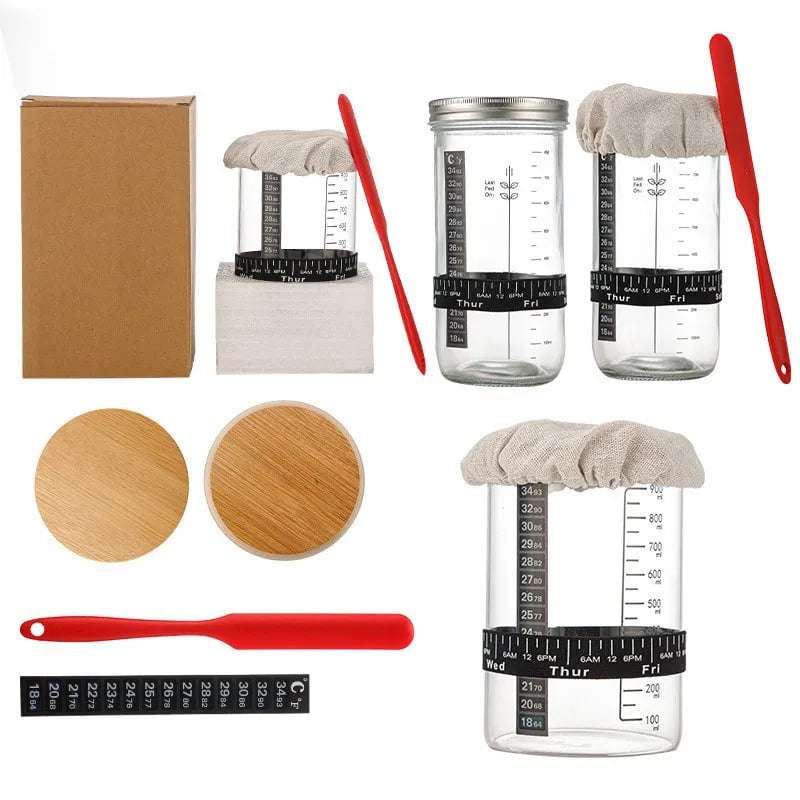
Graduated glass fermentation tank

High Borosilicate Glass: Made from premium heat-resistant material for safe fermentation and baking use
Measurement Scale: Clear markings for precise ingredient tracking during fermentation
Versatile Usage: Suitable for sourdough starter cultivation, yeast fermentation, and general kitchen storage
Airtight Seal: Secure lid design prevents leaks and maintains optimal fermentation conditions
Multi-Capacity Options: Available in 730ml and 1000ml sizes to suit different baking needs
- Complete sourdough starter kit: everything you need to grow an active starter and bake your first sourdough loaf at home
- Beginner-friendly tools: Each item is chosen to support the actual sequence of the sourdough process, from first feed to finished loaf
- Intended use: Growing a healthy sourdough starter from scratch and baking your first loaf with confidence
- Skill level: Designed for complete beginners; no prior sourdough or bread baking experience required
- Gifting: A practical, experience-led gift for anyone curious about home baking
- Tools matched to the process: Each item in the kit corresponds to a specific stage of sourdough baking; nothing is included for appearance, and nothing critical is missing
- Removes the research barrier: The biggest reason beginners stall before starting sourdough is not knowing what they need; a curated kit replaces that research phase with a single confident decision
- Supports the starter development window: The first 7–14 days of growing a starter are where most beginners give up; having the right tools from day one significantly improves the chance of getting through that window with an active, healthy culture
- Consistent results from the first feed: Wild yeast fermentation is predictable once you know what to look for; the kit is designed to help you read the signs correctly from the start, rather than troubleshooting blind
- Honest limitation: A starter kit accelerates setup and removes guesswork, but growing a reliable sourdough starter still takes 7–14 days of consistent feeding. The kit supports that process; it does not skip it
- Complete beginners starting sourdough from scratch with no prior experience and no existing tools
- Home bakers who have tried sourdough before and struggled: a structured kit with the right tools often resolves the gaps that caused earlier attempts to fail
- Gift buyers looking for a thoughtful, practical gift for someone curious about bread baking suits birthdays, housewarmings, and Christmas
- Bakers wanting to make classic sourdough loaves, sourdough focaccia, sourdough pancakes, and other recipes that call for an active wild yeast starter
- Not suited for: Bakers who already have an established active starter and are looking only for individual replacement tools; a single lame, whisk, or jar may be more practical in that case
- Not suited for: Commercial baking volumes. This kit is sized and packaged for home kitchen use
| Option | Setup effort | What you get | Beginner suitability | Best used when |
|---|---|---|---|---|
| Exanas Sourdough Starter Kit | Low everything in one place | Curated tools matched to the sourdough process, designed to work together | High structured for first-time starters | Starting sourdough from scratch with no existing tools or experience |
| Buying tools separately | High research, sourcing, and sizing each item individually | Full control over each tool; risk of mismatched or missing components | Low to moderate requires prior knowledge of what you need | Experienced bakers replacing or upgrading specific tools they already understand |
| Generic baking kit (non-sourdough specific) | Low | Broad baking tools not optimised for starter fermentation or sourdough scoring | Moderate: familiar tools, but gaps for sourdough-specific steps | General home baking across multiple bread styles, not sourdough-focused |
| Starting with improvised tools | None upfront; higher ongoing effort | Whatever is already in the kitchen; often results in substitutions that affect the starter or the bake | Low most beginner sourdough failures trace back to improvised tools or an inconsistent process | Experienced bakers who already know exactly what works and what to substitute |
- Sourdough starter residue dried flour paste releases easily from most surfaces when soaked briefly in warm water; avoid leaving residue to harden on jar walls or tool surfaces
- Between feedings: Store your starter loosely covered at room temperature during active baking periods, or sealed in the refrigerator if baking less than once a week a refrigerated starter needs a feeding 4–8 hours before use to reactivate
- Blade care (if a scoring tool is included): Dry blades immediately after rinsing to prevent rust; replace when scoring starts to feel like dragging rather than cutting cleanly through the dough surface
- General rule: Hand wash tools used with live starter cultures and dry promptly; prolonged soaking can affect handles and joints over time
- What to avoid: Leaving starter residue to dry and harden; storing tools damp; using harsh chemical cleaners on any surface that will come into contact with your starter culture
-
Is this kit suitable for a complete beginner who has never made sourdough before?
Yes. The kit is designed specifically for bakers starting from scratch, no prior sourdough experience needed. The tools are chosen to support the starter-growing process from the very first day. Growing an active starter takes 7–14 days of consistent feeding, but the kit gives you everything you need to get through that window successfully.
-
What is a sourdough starter and why do I need one?
A sourdough starter is a live fermented culture made from flour and water. As wild yeast and beneficial bacteria colonise the mixture over several days of regular feeding, it becomes active enough to leaven bread without commercial yeast. It's what gives sourdough its signature tang, open crumb, and long shelf life. Without an active starter, you can't make real sourdough, building one is the essential first step, and it's exactly what this kit is designed to support.
-
Is a sourdough starter kit worth buying, or can I just source the tools myself?
If you already know exactly what you need and have sourdough experience, sourcing tools individually gives you more control. But for a first attempt, the main advantage of a starter kit is that the tools are chosen to work together and cover the actual sequence of the process, you're not cross-referencing lists or second-guessing whether a vessel is the right size. Most people who struggle on their first try report that gaps in their setup, not the process itself, were the problem.
-
How long does it take to grow an active sourdough starter?
Most starters become reliably active within 7–14 days of consistent feeding, though this varies depending on ambient temperature, flour type, and water quality. Warmer kitchens, around 24–26°C / 75–79°F tend to produce faster fermentation. The first few days can look discouraging with little visible activity, but by days 4–7 most starters show clear signs of life: bubbling, rising after feedings, and a smell that shifts from sharp to something closer to ripe fruit.
-
Can I give this as a gift to someone who doesn't bake yet?
It works well as a gift for someone curious about home baking, even without prior experience, the beginner-friendly design is intentional. The tools are practical, the process is clear, and the recipient can begin the same day it arrives. The 30-day money-back guarantee also means they can return it if it turns out not to be right for them.
-
What bread can I make once my starter is active?
A healthy sourdough starter can leaven a wide range of baked goods beyond a classic sourdough loaf, including sourdough focaccia, flatbreads, sourdough pancakes, waffles, and enriched doughs like sourdough brioche. Your first loaf will likely be a simple open-crumb sourdough, and once that works, the range of what's possible expands considerably.
-
What is your return policy?
Exanas offers a 30-day money-back guarantee on all products. If you're not satisfied, contact the support team within 30 days of receiving your order. Worldwide delivery is available, and orders over $50 qualify for free shipping.
- Complete sourdough starter kit: everything you need to grow an active starter and bake your first sourdough loaf at home
- Beginner-friendly tools: Each item is chosen to support the actual sequence of the sourdough process, from first feed to finished loaf
- Intended use: Growing a healthy sourdough starter from scratch and baking your first loaf with confidence
- Skill level: Designed for complete beginners; no prior sourdough or bread baking experience required
- Gifting: A practical, experience-led gift for anyone curious about home baking
- Tools matched to the process: Each item in the kit corresponds to a specific stage of sourdough baking; nothing is included for appearance, and nothing critical is missing
- Removes the research barrier: The biggest reason beginners stall before starting sourdough is not knowing what they need; a curated kit replaces that research phase with a single confident decision
- Supports the starter development window: The first 7–14 days of growing a starter are where most beginners give up; having the right tools from day one significantly improves the chance of getting through that window with an active, healthy culture
- Consistent results from the first feed: Wild yeast fermentation is predictable once you know what to look for; the kit is designed to help you read the signs correctly from the start, rather than troubleshooting blind
- Honest limitation: A starter kit accelerates setup and removes guesswork, but growing a reliable sourdough starter still takes 7–14 days of consistent feeding. The kit supports that process; it does not skip it
- Complete beginners starting sourdough from scratch with no prior experience and no existing tools
- Home bakers who have tried sourdough before and struggled: a structured kit with the right tools often resolves the gaps that caused earlier attempts to fail
- Gift buyers looking for a thoughtful, practical gift for someone curious about bread baking suits birthdays, housewarmings, and Christmas
- Bakers wanting to make classic sourdough loaves, sourdough focaccia, sourdough pancakes, and other recipes that call for an active wild yeast starter
- Not suited for: Bakers who already have an established active starter and are looking only for individual replacement tools; a single lame, whisk, or jar may be more practical in that case
- Not suited for: Commercial baking volumes. This kit is sized and packaged for home kitchen use
| Option | Setup effort | What you get | Beginner suitability | Best used when |
|---|---|---|---|---|
| Exanas Sourdough Starter Kit | Low everything in one place | Curated tools matched to the sourdough process, designed to work together | High structured for first-time starters | Starting sourdough from scratch with no existing tools or experience |
| Buying tools separately | High research, sourcing, and sizing each item individually | Full control over each tool; risk of mismatched or missing components | Low to moderate requires prior knowledge of what you need | Experienced bakers replacing or upgrading specific tools they already understand |
| Generic baking kit (non-sourdough specific) | Low | Broad baking tools not optimised for starter fermentation or sourdough scoring | Moderate: familiar tools, but gaps for sourdough-specific steps | General home baking across multiple bread styles, not sourdough-focused |
| Starting with improvised tools | None upfront; higher ongoing effort | Whatever is already in the kitchen; often results in substitutions that affect the starter or the bake | Low most beginner sourdough failures trace back to improvised tools or an inconsistent process | Experienced bakers who already know exactly what works and what to substitute |
- Sourdough starter residue dried flour paste releases easily from most surfaces when soaked briefly in warm water; avoid leaving residue to harden on jar walls or tool surfaces
- Between feedings: Store your starter loosely covered at room temperature during active baking periods, or sealed in the refrigerator if baking less than once a week a refrigerated starter needs a feeding 4–8 hours before use to reactivate
- Blade care (if a scoring tool is included): Dry blades immediately after rinsing to prevent rust; replace when scoring starts to feel like dragging rather than cutting cleanly through the dough surface
- General rule: Hand wash tools used with live starter cultures and dry promptly; prolonged soaking can affect handles and joints over time
- What to avoid: Leaving starter residue to dry and harden; storing tools damp; using harsh chemical cleaners on any surface that will come into contact with your starter culture
-
Is this kit suitable for a complete beginner who has never made sourdough before?
Yes. The kit is designed specifically for bakers starting from scratch, no prior sourdough experience needed. The tools are chosen to support the starter-growing process from the very first day. Growing an active starter takes 7–14 days of consistent feeding, but the kit gives you everything you need to get through that window successfully.
-
What is a sourdough starter and why do I need one?
A sourdough starter is a live fermented culture made from flour and water. As wild yeast and beneficial bacteria colonise the mixture over several days of regular feeding, it becomes active enough to leaven bread without commercial yeast. It's what gives sourdough its signature tang, open crumb, and long shelf life. Without an active starter, you can't make real sourdough, building one is the essential first step, and it's exactly what this kit is designed to support.
-
Is a sourdough starter kit worth buying, or can I just source the tools myself?
If you already know exactly what you need and have sourdough experience, sourcing tools individually gives you more control. But for a first attempt, the main advantage of a starter kit is that the tools are chosen to work together and cover the actual sequence of the process, you're not cross-referencing lists or second-guessing whether a vessel is the right size. Most people who struggle on their first try report that gaps in their setup, not the process itself, were the problem.
-
How long does it take to grow an active sourdough starter?
Most starters become reliably active within 7–14 days of consistent feeding, though this varies depending on ambient temperature, flour type, and water quality. Warmer kitchens, around 24–26°C / 75–79°F tend to produce faster fermentation. The first few days can look discouraging with little visible activity, but by days 4–7 most starters show clear signs of life: bubbling, rising after feedings, and a smell that shifts from sharp to something closer to ripe fruit.
-
Can I give this as a gift to someone who doesn't bake yet?
It works well as a gift for someone curious about home baking, even without prior experience, the beginner-friendly design is intentional. The tools are practical, the process is clear, and the recipient can begin the same day it arrives. The 30-day money-back guarantee also means they can return it if it turns out not to be right for them.
-
What bread can I make once my starter is active?
A healthy sourdough starter can leaven a wide range of baked goods beyond a classic sourdough loaf, including sourdough focaccia, flatbreads, sourdough pancakes, waffles, and enriched doughs like sourdough brioche. Your first loaf will likely be a simple open-crumb sourdough, and once that works, the range of what's possible expands considerably.
-
What is your return policy?
Exanas offers a 30-day money-back guarantee on all products. If you're not satisfied, contact the support team within 30 days of receiving your order. Worldwide delivery is available, and orders over $50 qualify for free shipping.